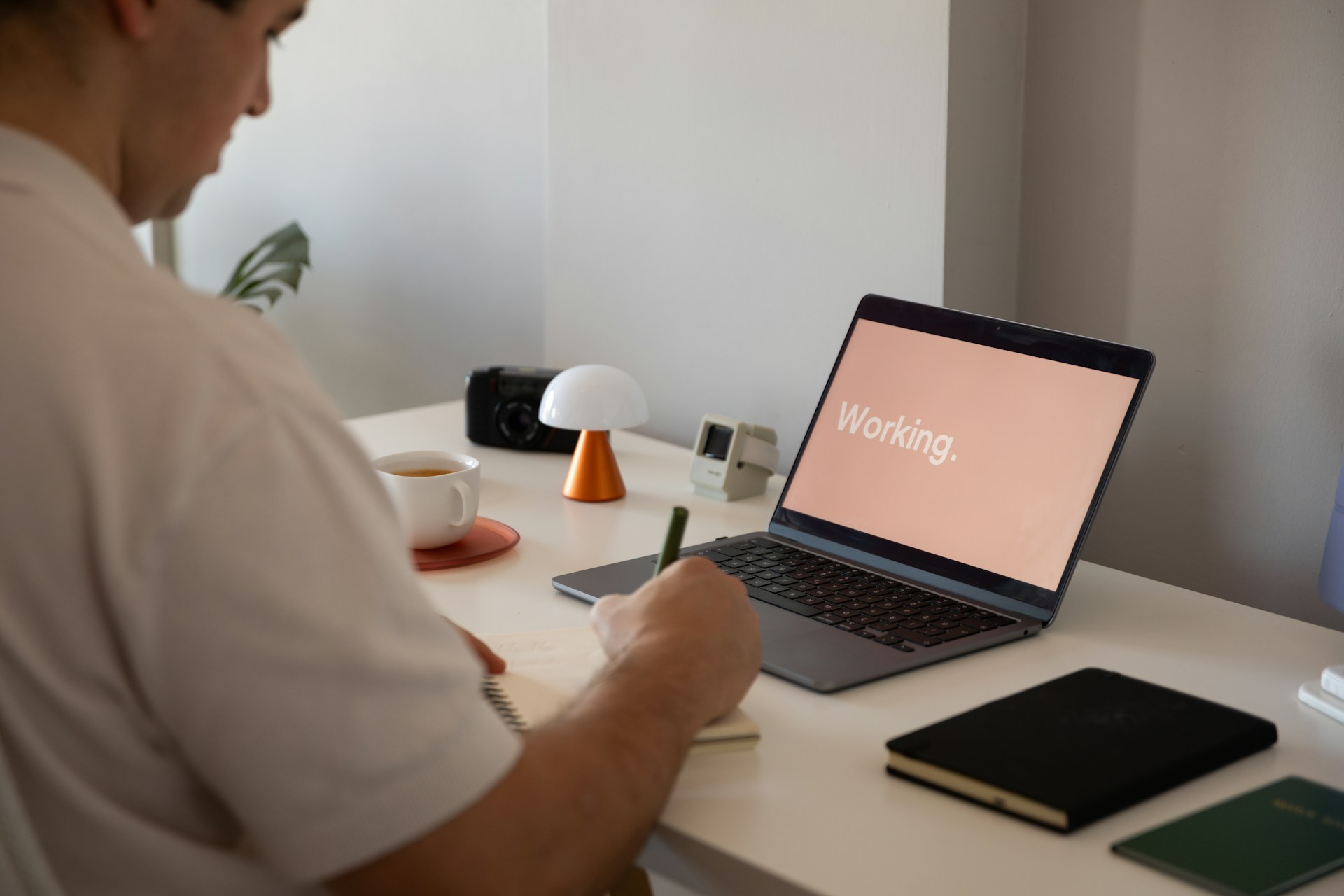
There’s something quietly powerful about entering a space that seems to know what you need before you do. In a well-thought-out home office, this feeling is not a luxury—it’s the baseline. It’s a space shaped not by aesthetic trends or one-size-fits-all solutions, but by the rhythm of your day and the flow of your energy.
A space that moves when you do
Static environments can leave the mind stagnant. Movement, even subtle, has a way of reviving focus. A chair that swivels easily, a desk that rises at just the right pace, curtains that shift with the light—these small elements create a space that doesn’t feel frozen in place. In a home office, these touches matter. They signal that your workspace is a participant in your process, not a backdrop.
Instead of forcing yourself into a fixed layout, consider how the room responds to your pace. If mornings feel intense and driven, arrange your workspace to meet that momentum—clear lines, direct light, easy reach to your tools. If afternoons lean more contemplative, soften the edges. Introduce a slower corner. A different lamp. A reading chair that waits for when you need to rethink a problem away from the screen.
Details that hold more than objects
Every item you place around you carries energy. A pencil cup isn’t just storage. The way it catches light or echoes the grain of your wooden desk can influence how calm or rushed you feel. A shelf placed just slightly higher or lower can subtly encourage you to stretch, stand, shift your focus.
In a home office, where boundaries between professional and personal often blur, these small sensory cues become powerful. They tell your brain what kind of space you’re in. They help create a ritual of presence—this is where I think clearly, solve patiently, write purposefully. Your objects, if chosen well, reinforce that mindset without ever needing to speak.
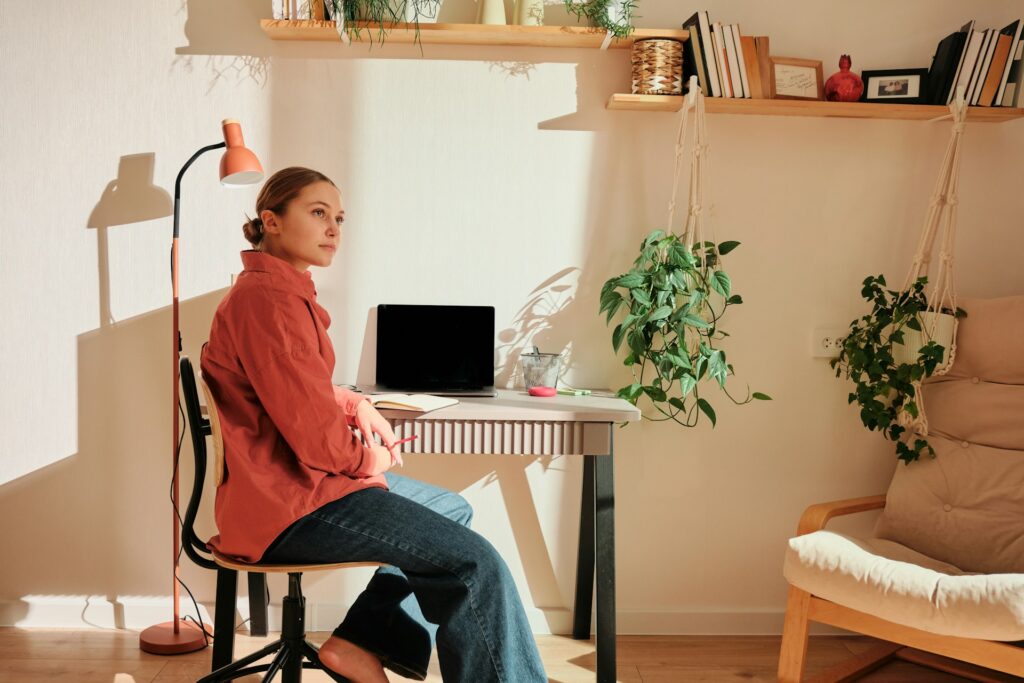
Shaping the soundscape
Sound doesn’t begin or end with music. The echo of your own voice on a video call, the click of a keyboard, even the hum of distant traffic outside—all of these contribute to how focused or scattered you feel. A home office that pays attention to acoustics doesn’t need to be silent, but it should offer sound that supports intention.
Adding materials that absorb or soften—textured rugs, wall-mounted wood panels, even well-placed plants—can change the entire feel of the room. Not just aesthetically, but emotionally. A space that doesn’t echo harshly helps you stay inside your thoughts longer. It keeps distractions out, even if they’re invisible.
Lighting that respects time
Harsh lighting doesn’t keep you alert—it pushes. And eventually, it exhausts. Natural light, when used with care, doesn’t just brighten your home office; it supports your circadian rhythm. It reminds your body where it is in the day.
When sunlight fades, warm task lighting takes over. Shadows are welcome—they define space. A workspace doesn’t need to be lit like a lab to feel productive. It needs to feel alive. Responsive. A place where your eyes can rest without closing.
A desk that remembers who you are
The heart of a home office is often the desk. But a desk isn’t just a surface—it’s a partner. Its texture under your wrist, the way it holds the weight of your forearms, how its lines guide your posture—they all matter. A well-designed desk holds more than your laptop. It holds your workflow, your momentum, your quiet frustrations and occasional breakthroughs.
When the desk fits your body and the way you move, it disappears from awareness. That’s how it should be. No jolts, no wobbles, no moments of adjustment. Just pure support. Like it was built for the way you think.
Work that begins with atmosphere
Before the first email is opened or the day’s task list is reviewed, your environment has already spoken. It tells your body whether to tighten or loosen, whether the day will be rushed or paced. The home office should whisper: you’re ready.
It does this not with slogans on the wall or excessive gear, but with restraint. Enough clarity to breathe, enough warmth to stay. Enough rhythm to move forward without resistance.
In shaping a space that thinks alongside you, the home office becomes less about what it holds—and more about what it allows. And what it allows, when designed with care, is everything that truly matters.
Dodaj komentarz